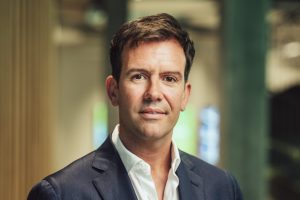
Alentis Therapeutics, under the leadership of its CEO Roberto Iacone, has made significant strides in advancing innovative therapies targeting Claudin-1, a protein critical in inflammation and cancer. The company’s pipeline includes promising antibody-drug conjugates (ADCs), such as ALE.P02, currently in a Phase I/II clinical trial, and ALE.P03, expected to enter clinical development by the end of 2025. With a recent USD 181.4 million Series D financing round, Alentis is poised for continued growth and clinical success.
Could you start by briefly introducing yourself and how you came to join Alentis in 2020?
Ever since I was a child, I had a dream—to one day contribute to the discovery of medicine. It was always very clear to me. Even at six years old, if someone asked what I wanted to do, I would say, “I want to discover medicine.”
I went on to study medicine and earned my MD, then pursued a PhD in Germany. During that time, I realised that understanding how medicines are actually developed and brought to patients was equally important. That is what led me to join Roche. I started there in a relatively modest role as a lab manager, but I was fortunate because they had a keen interest in stem cell research, which aligned perfectly with my PhD work at the Max Planck Institute.
At Roche, I was exposed to a truly comprehensive environment spanning commercial operations, early development, and research. It allowed me to understand how a scientific concept is turned into a viable medicine. As I progressed and took on more managerial responsibilities, I began to lead work in rare disease research. This role brought me into close contact with venture capital firms, as I was tasked with sourcing innovative assets from biotech companies to support Roche’s internal pipeline.
Through these interactions, I learned around 80 percent of the medicines approved or commercialised at big pharma had originated from biotech acquisitions. That insight really caught my attention and made me curious about what was happening in the biotech world.
In 2017, I decided to leave Roche to explore the venture creation side. I joined Versant Ventures, a global venture capital fund with several billion under management, specialising in building biotech companies from the ground up. I became part of the company creation team, and our mission was to launch innovative start-ups.
One of the first companies I helped to create was Black Diamond Therapeutics, focused on oncology and EGFR-driven cancers. We established it in New York and Basel. It was a fantastic experience, seeing how an idea could be taken from early research and translated into a clinical-stage company. Black Diamond eventually went public on the Nasdaq, and although I wasn’t the CEO, I was very much involved in preparing the company, especially with regard to fundraising. It was a major learning experience.
After that, we went on to launch another company, Bright Peak Therapeutics, based in Switzerland. This time, we worked closely with the tech transfer office at the University of Zurich, where we came across a remarkable platform developed by Professor Jeffrey Bode. Often in academia, you see brilliant technologies without a clear pathway to turning them into clinical products. That’s where we came in—we helped shape the concept, built a strong IP foundation for the platform, and positioned it for growth where it is now in the clinical stage.
Early 2020, I was looking for the right opportunity to step into the role of CEO for the first time. That’s when I was introduced to Professor Thomas Baumert, through a former and fouding board member of Alentis Dr. Andreas Wallnoefer. Thomas is based in Strasbourg and is the scientific founder of Alentis. When I visited Strasbourg and saw his team and the laboratories, I was immediately taken by the quality of the science. Thomas had uncovered the role of Claudin-1 in inflammation and organ fibrosis, and the data was compelling. At the same time, I was aware of the growing role that other members of the Claudin family—particularly Claudin 18.2—was starting to play in oncology. That sparked an important conversation between us. I told him we needed to take this cutting-edge science not only to patients with inflammatory and fibrotic diseases but also explore its potential in oncology. That is really where the Alentis journey began.
What was your mandate when you joined as CEO?
Academia plays a vital role in discovery and innovation, but it often doesn’t have the infrastructure or capability to fully develop those ideas into viable medicines. There is a gap between generating breakthrough science and turning that into a product. Even one that is clearly positioned, fundable, prioritised according to unmet medical need, and ready for potential commercialisation.
Thomas recognised that. He had taken a significant step with his research and founding the company, but the next step of building this idea into a tangible therapeutic product required a different kind of expertise. That is where I could contribute by bringing the strategic and operational experience I had gained at Roche and within the venture creation space. It was very much complementary as he brought the deep scientific innovation, and I could help translate that into a company vision and clinical pipeline.
What we did was take the foundational science and develop the first monoclonal antibody designed for clinical use targeting Claudin-1 in its exposed form. That molecule is now called lixudebart. After five years of development, we have completed a Phase Ib study in liver fibrosis, and we have also released interim results from a Phase II trial in patients suffering from rapidly progressive glomerulonephritis due to ANCA-associated vasculitis (AAV-RPGN), a serious disease causing patients to rapidly lose kidney function.
The results we have so far are promising. The data suggest that by targeting the injury within the kidney directly, lixudebart improves filtration rate, essentially preserving kidney function. We also saw reduced leakage of protein in the urine, which is a measure of kidney damage.
To go from an academic concept to a first-in-class monoclonal antibody, and now seeing the first signs of efficacy in patients, is a very meaningful and encouraging journey.
Could you please give an overview of Claudin-1 and what makes it so innovative?
In our bodies, cells are often arranged in tightly packed layers, and they are held together by structures called tight junctions. These junctions play a crucial role in maintaining the barrier function between different tissues and organs. For example, separating the contents of the gut from the bloodstream, or protecting the brain.
Claudin-1 is one of the key proteins involved in forming these tight junctions. Under normal physiological conditions, Claudin-1 sits within these junctions, almost like the teeth of a zipper. In this position, it is structurally shielded, and the specific part of the protein that our antibody binds to is hidden and inaccessible.
Thomas discovered that when cells become inflamed, or when they undergo cancerous transformation, Claudin-1 is displaced and becomes exposed on the cell surface, outside of the tight junction. What he developed was an antibody that specifically recognises and binds to this exposed form of Claudin-1, without interacting with its normal, physiological counterpart. That specificity is what makes the technology so powerful.
What is particularly exciting is that this exposed form of Claudin-1 is not only a marker of disease, but also contributes actively to pathogenic processes. It drives key signalling pathways that promote both tumour growth and fibrosis in inflamed organs. So by targeting it, we are not just identifying diseased cells, we are also interrupting the very mechanisms that cause disease progression.
That is where the real potential lies. For example, in kidney disease, we can use the antibody to break the cycle of inflammation and fibrosis that leads to organ failure. In cancer, the opportunity goes even further. In tumour tissues, Claudin-1 is often entirely exposed on the surface of the cancer cells, whereas in healthy tissues it remains shielded. This difference allows us to selectively target tumour cells while sparing normal ones. Thus, we have taken the approach a step further by arming our antibody with cytotoxic payloads. These are drugs that can kill the cancer cell once the antibody has bound to it.
This strategy is known as an antibody-drug conjugate (ADC). It is a very promising modality in oncology. At Alentis, we currently have two ADC programmes in our pipeline: ALE.P02 and ALE.P03.
ALE.P02, armed with a tubulin inhibitor payload, is in clinical development. A Phase I/II clinical trial is recruiting patients for several squamous tumour types, including squamous cell lung cancer, head and neck cancers, oesophageal cancer, and cervical cancer. These are cancers where Claudin-1 is exposed and where there is a pressing need for more targeted therapies.
ALE.P03, our second ADC, uses a different type of payload—specifically, a topoisomerase I inhibitor. As you know, different cancers respond to different types of chemotherapy, so having multiple payload strategies gives us more flexibility. ALE.P03 is particularly promising in colorectal cancer and cholangiocarcinoma, which is cancer of the bile ducts. Both are difficult-to-treat tumours with limited therapeutic options today.
So, the entire pipeline is built around this single biological insight of Claudin-1 behaving differently in diseased versus healthy tissues. By targeting only the exposed pathological form, we are able to intervene very precisely, whether it is to modulate inflammation and organ fibrosis in the kidney, or to deliver potent cytotoxics to kill cancer cells directly.
Where do things currently stand with the oncology pipeline? Could you give us an overview of progress so far?
Our lead oncology programme, ALE.P02 Claudin-1 ADC, is being investigated in a combined Phase I/II clinical trial. We are actively recruiting patients across multiple regions including the US, Europe and Asia.
This first-in-human study will tell us a lot about ALE.P02 and should provide us with a robust data set, particularly in terms of understanding safety and early signs of clinical benefit.ALE.P02 is currently the most advanced programme in our oncology pipeline. ALE.P03 is also progressing well. It is scheduled to enter clinical development this year. So, soon, we will have two antibody-drug conjugates targeting Claudin-1 in clinical trials, each addressing different indications and leveraging different payload strategies. That positions us strongly, with two distinct approaches tailored to specific cancer types.
Can you share your experience with the USD 181.4 million Series D financing round and how the investment ecosystem responded to your platform?
It is a major milestone and very encouraging to see this level of support, though it certainly wasn’t easy. The biotech funding landscape has been incredibly tough, especially in the post-COVID period. During the pandemic, there was a surge in investment and interest, but that was followed by a significant market correction which has been difficult for everyone in the sector.
What helped us succeed was a combination of key factors. First, we have assembled a strong, experienced team across both Switzerland and the US. That has been critical, not just for execution, but for building investor confidence.
Second, the uniqueness of our technology stood out. Our ADCs target Claudin-1, which is a novel target in this space. While Claudin-1 itself is relatively new in the context of ADCs, it belongs to the broader Claudin protein family, which is already well established in oncology.
To give a specific example: the first approved antibody in this space targeted Claudin 18.2. That programme gained a lot of attention. The CEO of BioNTech, Ugur Sahin, actually started that programme under a company called Ganymed, which was acquired by Astellas. From there, he spun out BioNTech. So that story really paved the way and gave visibility to the potential of Claudin proteins as therapeutic targets.
What differentiates Claudin-1 is its broader relevance. Whereas Claudin 18.2 is mainly expressed in just two tumour types, Claudin-1 is overexpressed in nine major cancer indications. That is a huge leap in potential. When we presented this to investors, we could say: if one target worked in just two tumour types, imagine the opportunity here.
Among those nine, we are focusing on four with particularly high unmet medical need and strong commercial potential: colorectal cancer (for programme ALE.P03), as well as lung squamous cell carcinoma, head and neck cancers, and cervical cancer (for programme ALE.P02). That compelling case enabled us to bring on board leading investors from both the US and Europe in this Series D round.
What is your strategy for deploying these funds—both in terms of development and possibly organisational growth?
The funds from the Series D are primarily being directed toward the continued development of our ADC platform, ensuring we recruit patients efficiently and execute our trials at the highest possible level. Operational excellence is key, and we have put our heads down and we are focused on delivering results.
At the same time, we are also thinking ahead. We are now working on what we consider the third generation of Claudin-1-targeted therapies. While I can’t go into specifics, the vision is to further broaden our therapeutic reach.
The idea behind this new class is to enable us to target patient populations with lower levels of exposed Claudin-1. In the ADC space, that is very important because not all tumours express the target at the same intensity. So, we are designing next-generation molecules that could offer more precise targeting and expand treatment to an even wider patient base.
This programme is still early-stage, but it shows the long-term potential of our Claudin-1 platform. We are not just building a single product, but an entire therapeutic ecosystem around a novel target.
Taking on this position as CEO for the first time, what is your philosophy around building a successful team?
First and foremost, transparency is essential. When we recruit, we are very open about how we work, who we are, and what values we stand for. At Alentis, that means a strong sense of urgency, deep passion for the mission, and an unwavering commitment to creating benefit for patients. It also means being fair and recognising good work.
The work is intense, there is no denying it, but it is incredibly rewarding. That attracts a certain kind of person coming out of pharma, biotech, and sometimes even academia, who wants to be directly involved in innovation and decision-making
Our reputation also plays a role. People see Alentis as a company operating at a high standard, with strong science, sound strategy, and clinical programmes that are making great progress. That helps us attract the right talent, especially here in Switzerland, where there is such a strong pool in drug discovery and development.
Aside from Switzerland’s many advantages, are there any challenges you have faced within the local biotech ecosystem?
Switzerland has an excellent environment for early-stage biotechs with strong academic institutions, great talent, very good incubator funds, and local Swiss and European investors who support early innovation. The challenge comes when a company reaches a certain scale. At Alentis, for example, we have three programmes in development and running global trials is extremely capital-intensive. At this point, smaller funds simply don’t have the capacity to support that level of development.
This means you must look to larger institutional investors. While Europe has some excellent funds, the number is still limited compared to the US. The challenge becomes balancing the incredible innovation and talent in Switzerland with the need to attract international capital to support clinical-stage growth.
Looking ahead, what is the long-term vision for Alentis? Are you considering a public offering, or perhaps being acquired by a larger pharmaceutical company?
It is a question we are often asked. But I always say that companies are not sold, they are bought. You can’t build a company with the intention of selling it. You have to focus on doing good science, delivering results, and demonstrating value to patients. If you do that, potential partnerships or acquisitions may follow naturally.
In terms of fundraising, we have raised over USD 300 million in the past five years. Given our current stage, we are evaluating the public markets. Going public gives you access to a broader capital base, which is crucial for continued development.
Whether we take that step will depend on two main factors: the state of the public market, which at the moment is somewhat subdued, and the maturity of our data. We will be watching both closely.
What are the key milestones you are looking towards over the next few years?
There are three major milestones we are focused on. First, our lead candidate, lixudebart, is in Phase II and we have seen promising interim data. Going forward, the goal is to consolidate that over the next 12 months.
Second, we initiated clinical trials for ALE.P02, our first ADC. This Phase I/II trial will provide us with a robust data set on safety and early signs of clinical benefit.
Finally, we plan to bring ALE.P03, our second ADC, into clinical development this year. That will give us two Claudin-1-targeting ADCs in the clinic, addressing multiple high-need oncology indications.
Any final thoughts you would like to share on behalf of Alentis?
As a European and Swiss company, we have a responsibility. Europe has a long history in pharmaceuticals, with pioneers like Bayer, Novartis, and Roche. But innovation today is increasingly global and fast-paced. So it is critical that Europe, and Switzerland in particular, continues to play a leadership role—not just in science, but in technology and AI-driven drug discovery as well.
We need strong support from European stakeholders to help scale companies like ours. That is the only way we will maintain a leading position in global healthcare innovation, and I am proud that Alentis is contributing to that vision.