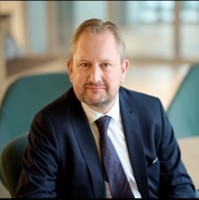
Mads Stoustrup, co-founder and CEO of Azento Health, shares his journey from 22 years at Novo Nordisk to launching a science-driven startup focused on supporting patients undergoing GLP-1 treatment for obesity. Azento Health develops clinically backed probiotic supplements, designed to reduce gastrointestinal side effects and improve treatment adherence. Backed by over 250 scientific articles, Forte80 is already on the market and being used in Swiss obesity clinics. With a product and development roadmap addressing weight regain, muscle loss, and nutritional gaps, the company aims to build a full support ecosystem around GLP-1 therapies and shape the future of obesity care through personalized, microbiome-based solutions.
After spending over two decades at Novo Nordisk, you have now taken the leap into launching a start-up. What led you to make such a shift?
After 22 years at Novo Nordisk, I stepped away and started working in consulting and advisory roles. During that time, I had a pivotal discussion with a very good friend who was on a GLP-1 for weight loss. He had been on and off GLP1s for 7 months trying to lose weight but had a lot of challenges with the gastrointestinal side effects (nausea and constipation) and was very frustrated with the treatment experience. It is very unpleasant, time-consuming, and reduces his – and his family’s – quality-of-life. And he is not alone. A high number of patients experiencing unpleasant side effects including nausea, diarrhoea, constipation, bloating and other GI side effects that are quite common with these drugs. Something that is underrated by many doctors and pharma companies. Based on this personal discussion, I ask myself: why are patients, who are already facing the challenge of weight loss, also forced to cope with such unpleasant side effects?
That question led to a deeper investigation: how can we better support people on a weight loss journey with GLP-1 and, perhaps, enhance the GLP-1 treatment experience overall? The statistics around patient adherence are quite striking. It has been published that up to 85 percent of patients experience side effects, dropout rates are often reported to be close to 50 percent after just one year, and new real-world data from a large US database shows that 58 percent of patients discontinue treatment after only three months. Clearly, there is an issue here, and a real need to support patients more effectively.
From these conversations and observations, I connected with my two co-founders. Jesper Gantzel, a seasoned entrepreneur in Denmark with a strong track record in gut microbiome ventures, and Dr. Pete Kaufmann, who holds a PhD in microbiology from ETH Zurich and has previously served as CEO of a large pharma nutrition company. Together, we began exploring what we could do to address this unmet need.
We partnered with a research-driven company called Nordic Biotic, where their CSO, professor Cukrowska, helped us think through the design of various products that could genuinely support patients on this journey. That is how we developed our signature probiotic supplement: Forte80. We looked closely at the scientific literature on the gut microbiome of obese people and people on a weight loss journey with GLP1 and asked how we could design specific bacterial strains that would support them through treatment.
The result is a scientifically robust product with more than 250 supporting articles. We have IP rights as three strains are secured under patent deposit, and we have assembled a team with deep experience and expertise in this space. Alongside that, we have a clear roadmap not only for clinical trials, but also for gathering real-world evidence. We are also focused on building out our product and commercial strategy for the longer term.
What has that personal experience been like for you on this journey of launching your own start-up?
The past year has been very different, to say the least. When you are in a senior leadership role within a large company, your days are filled with meetings, people management, leadership and strategic planning. In a start-up, however, you are doing everything yourself. One moment you are focused on your long-term roadmap, board, and shareholder activities and the next you are handling customer service and urgent customer tasks. It’s changing by the hour.
This shift has been both challenging and incredibly rewarding. As founders, we are fully involved in every aspect of the business, though we are fortunate to have a great team around us as well. What makes this an exciting time to build a company is how accessible knowledge and tools have become. With AI and modern technology, you can learn almost anything quickly. The barrier to build a company has probably never been lower.
In addition, partnerships are far easier to establish and manage now. We are collaborating with people in Poland, in Denmark, and across various locations. There is no longer a need to be physically in the same space. Everyone is now trained to work virtually, and that opens up a world of opportunities.
So, yes, it is a very different experience, but in the best possible way. I truly believe this is one of the best times to start a company – technology, connectivity, and global collaboration make it more achievable than ever before.
You spent two decades at Novo Nordisk. Beyond identifying the gap in patient care, what aspects of that experience have helped shape the way you are building your company now?
I joined Novo Nordisk as a graduate back in 2001, so in many ways, I am shaped and developed by the company, by the leadership and by my experiences there. It was a fantastic journey for me, and I carry a lot of that with me today. One of the most important things I took away was the importance of having a clear sense of purpose, a strong focus and a triple-bottom-line mindset in everything you do. It is essential to understand why you are doing something and who it is ultimately for.
Alongside that, Novo Nordisk instilled in me a set of strong values, particularly around openness, honesty, trust, people and leadership. Those principles have guided me throughout my career and continue to do so as we build this new company. I am very proud of what I achieved earlier in my career at Novo Nordisk and incredibly grateful for what I learned there. That foundation has absolutely influenced how I lead and how we are approaching this new venture.
Can you tell us more about Azento Health’s probiotic solution? Are there others working in this space, or are you among the first?
It is a very exciting time in the gut microbiome field within many different areas. We are definitely not the only ones looking at GLP1 and obesity and there are others exploring similar directions, ideas and research areas. However, what differentiates us is the way we have approached the problem. That is something I carried with me: start with the patient, their pain-point and the problem they are facing, not with “your product or idea”.
Many products on the market have been developed from the perspective of, “We have a probiotic, let us find someone to sell it to.” Our approach has been the opposite. We began with empathy and a genuine desire to support people struggling with weight loss, and from that purpose, we design our products and solutions. That mindset influences everything from the way the product is developed, to how we communicate with patients and consumers, and how we ultimately serve them. It may not sound like a major difference, but having that clear purpose and patient focus leads to better design, stronger engagement, and more meaningful outcomes.
When we realised this opportunity, we moved quickly. We saw a gap for a scientifically grounded product in the European market, and that spurred us to accelerate development. We examined everything from the patient’s gut microbiome to the specific side effects linked to GLP-1 medications. Working closely with our research team, we used bioinformatics databases, full genome of biotic strains, and AI models to analyse and develop the optimal product. The goal was to understand, with precision, which strains could offer the most support and in what formulation.
The result is a product with a very high cell count – over 80 billion bacteria per dose – and four scientifically selected strains. Beyond that, we have invested in the delivery technology. The live bacteria are produced and packed into capsules designed to protect them, ensuring that they survive the journey through the stomach and reach the right place in the gut. We also pack the capsules in a blister for better protection. This is critical because in this space, many products are vague about their formulation, quality and origin. We wanted to do things differently in a more scientific and patient focused way.
Of course, entering this category also comes with challenges. The industry is full of products that are not taken seriously due to poor evidence or inconsistent quality. That is why we are committed to building and developing a robust scientific foundation. We are currently running a randomised controlled trial and working on different scientific collaborations with university hospitals and obesity clinics here in Switzerland. Alongside that, we are working on collecting real-world data to support our claims and strengthen the evidence base behind our product even further.
The product is already on the market, just months after you officially founded the company. That is incredibly fast. Can you walk us through the path to commercialisation and what that process has been like?
It has been very fast, a little under the radar and that was intentional. We made a strategic decision early on in 2024 to move quickly and took some inspiration from the tech world. The idea is that you should get your product out there as soon as possible, test it in the real world, and adapt and optimize based on what you learn. Of course, we did some market research beforehand, but it is a very different experience once you actually have the product in hand and can see how the market reacts.
In pharma, launching a product would typically take many years and millions in pre-marketing and medical investments. Here, we had none of that. We just brought the product to market and started real learnings from day one. It is a completely different model, and one we were ready to embrace.
We built our commercial strategy around three core pillars. The first is working directly with obesity clinics in Switzerland. These clinics already have a deep understanding of the patients and the challenges they face, so they are well-positioned to recommend our product. The second is direct-to-consumer, where people can buy the product via our website. We are gradually building our social media presence and working with partners to better understand how to engage and communicate with consumers directly. For both pillars the objective is to generate sales, experiences and learnings.
The third route is B2B. We are currently exploring different types of partnerships. We have already had discussions with some very large players in the sector who might be interested in licensing the product. At the same time, we are also looking at smaller or mid-sized local distributors, particularly as we expand into new regions like the Middle East and Asia. Over the next few months, we will be engaging more actively in those conversations. The feedback so far has been overwhelmingly positive, and I truly believe there is significant potential in markets like the Middle East, where there is already high usage of GLP-1 medications and a real need for supportive solutions like ours.
From the beginning, our go-to-market plan has not been fixed. We know we will need to adjust as we learn more. Fortunately, our founding team brings a great deal of experience. We trust our instincts and believe we will find the right path, even if it is less structured than the launches I was used to in the corporate world. You can do all the research, organise advisory boards, and run simulations, but you only really start to understand the market once your product and go-2-market approach is out there. That is the real moment of truth – when you are holding your product in hand and asking: How many consumers will use it tomorrow?
Our manufacturing is based in Italy, through BioFarma, one of the leading players in the field. That was very important for us. We wanted a top-quality product, so we used advanced blister and capsule technology to protect the bacteria. With 80 billion bacteria per dose, we are confident that the product will remain effective for at least two years. We have robust stability data backing that up, and we are very focused on ensuring that what we promise is exactly what the patient receives.
Since you launched recently, do you have any early data or insight into how the product has been received?
The feedback has been great, but it is still early days as we only began commercialising in March. Also, as mentioned before, we intentionally skipped a lengthy pre-launch phase, opting instead to get the product out quickly and learn from the market. That said, the initial response has been very encouraging. We have had positive feedback from patients, which is incredibly motivating.
For example, one woman recently contacted me directly. She had been struggling with GLP-1 treatment due to side effects, and since taking Forte80, it has been working much better for her. She was so pleased that she said she would now also purchase it for her husband and child both also using GLP1s and having issues. That kind of real-world feedback is deeply rewarding, and it shows we are already making a meaningful impact.
We are currently collaborating with over ten obesity clinics in Switzerland. Some have moved more quickly than others, but overall, there is strong and growing interest in this field. Beyond the partnerships, we were pleasantly surprised when two major university hospitals in Switzerland independently approached us, expressing interest in conducting real-world evidence studies using our product. That kind of academic engagement really validates the scientific promise behind what we are doing.
I think the broader point here is important. GLP-1 drugs are truly game-changing in the fight against obesity and having so many strong outcome data, but they cannot do it alone. You still need a full support ecosystem of diet, exercise, structured guidance from dietitians and clinicians, encouragement from family, and ongoing care. It is not simply about injecting a treatment once a week and you are done.
Perhaps that is why we see such high dropout rates. People assume it is a one-step solution, but real success requires more than that. Our aim is to position our product as part of that essential support system. Azento Health can offer help with gut microbiota balance and to ease the side effects, so that patients are better supported and more likely to stay on their treatment journey.
How do you feel about the opportunities within the life science ecosystem in Switzerland for starting a company?
Switzerland has been a fantastic place to start a company, especially in the biotech and healthcare space. It is a hub for brilliant talent and expertise, which has been extremely valuable. In this industry, it is not just about having a great idea, it is about execution – and to execute well, you need the right people. And Switzerland has an abundance of talented individuals who are eager to help and support new initiatives.
The networks here are strong, and there is a great sense of collaboration within the healthcare, pharma, and biotech sectors. There is a growing ecosystem where experienced people are open to guiding start-ups. This has definitely made our journey smoother. In fact, this collaborative environment is one of the reasons we felt it was the right time to start the company here.
You mentioned that there are three co-founders – could you tell us more about the team and the roles you all play in the company?
Our founding team is diverse, with each of us bringing different expertise. Jesper Gantzel, our chairman, has a deep knowledge and experience in probiotics, gut microbiome, and product design. He has a lot of experience in building companies in this space, and he is heavily involved in the research, production, and product design aspects.
Peter Kaufmann, who holds a PhD from ETH Zurich in microbiology, brings a wealth of scientific and executive knowledge. He is very much involved in the scientific side of things but also drives leadership and B2B partnerships. As for myself, my background is more on the commercial side, especially within the pharma industry, so I am focused on patient-centric aspects, understanding the broader purpose of our company, and driving our commercial strategy.
Together, we form the core team. We also have a sales director, and we collaborate closely with several external partners – research institutions, manufacturers, distributors, marketing agencies and experts in various fields. It is a bit of a “spiral” approach, where we keep adding the right competencies, people and partners as we grow.
You mentioned testing assumptions and not scaling too early. How is Azento approaching product-market fit within its growth strategy?
One of the key lessons I have learned is that you need to test your product-market fit thoroughly before scaling. Right now, we are very much in testing mode. We have launched with a limited pre-marketing strategy to really see how the product is being received and understand what works both on the product and the commercial side. We are also testing different approaches to direct-to-consumer marketing, experimenting with minimal investments in Google Ads, Facebook, and Instagram to see which strategies resonate.
Only once we have a clearer understanding of what works, whether in terms of the product itself (and our future products) and the Go-2-Market strategies, will we scale up. We are being very humble and nimble in our approach, ensuring we don’t burn through money and resources before we know what is actually going to stick.
Looking ahead, what milestones or vision do you have for the company?
We are very early in this journey, but we have a clear roadmap. The four main challenges with GLP-1 products in the obesity space are side effects, weight regain after stopping the drugs, muscle mass loss during weight loss, and the need for supplementation during a weight loss journey. Our product roadmap addresses these issues, and we plan to design additional products that target these areas.
Next year, we hope to roll out a few new products, starting with those that can support GLP-1 users in managing side effects and weight regain. Beyond that, we are looking into areas like muscle preservation during weight loss and supplementing any nutritional gaps.
Obesity is a complex, multifactorial disease affecting over a billion people globally. With the explosive growth of the obesity market – from USD 36 billion in 2024 to a projected USD 101 to 205 billion by 2030 based on IQVIA research – the need for complementary support products and solutions is also growing. But it is not just about the drugs anymore.
I believe that the future of obesity care will be multi-dimensional. In the next 5 to 10 years, we expect to stop talking about “obesity” and “weight loss” as one single condition. Instead, we will talk about different types of obesity and anti-obesity solutions driven by genetics, phenotypes, lifestyle, comorbidities, gut microbiome, desired outcome, age, and more. Each will require different tools, therapies, and support systems to maximise long term outcome.
We want our company to play a central role in this future. Not just by selling products, but by offering sustainable, science-backed solutions that improve quality of life, reduce drop-out rates, and support long-term outcomes for patients.