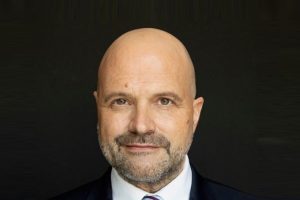
From its roots as a family-run ophthalmology business to its bold reinvention as a precision oncology biotech, CIS Biopharma is charting a distinctive course through the rapidly evolving life sciences landscape. Leading this transformation, CEO Christoph Schäfer shares the strategic rationale behind the company’s evolution, offering insight into how scientific rigour, platform-based innovation, and a lean operating model are positioning CIS Biopharma to address some of oncology’s most complex therapeutic challenges.
What first drew you into the healthcare sector, and how did your early experiences shape your path to leading CIS Biopharma?
Although my academic background lies in economics and business, having graduated from the University of Basel, my initial aspirations were far removed from healthcare. I envisioned a career in the luxury goods sector, attracted by the glamour and social dimension of that world. However, my trajectory shifted when I joined Alcon Laboratories, the global leader in ophthalmology, a company with longstanding ties to my family’s business.
It was in sales that I discovered a deep interest in the psychology of transactional relationships; meeting with physicians daily, understanding their expectations, and learning how to effectively position products provided invaluable early insights into the dynamics of the pharmaceutical industry. Over time, the sense of purpose inherent in healthcare and the long-standing scientific commitment of my family, active in the field for over 70 years, proved far more meaningful than any luxury brand might have offered. Following two formative years as a sales representative in the US, I moved into a European product management role, which marked the beginning of my shift toward strategic leadership. In 2003, I formally joined the family business, which was then centred on contract manufacturing through AMCIS, a spin-off that was later merged into CARBOGEN AMCIS and now forms part of the Dishman Group.
My arrival coincided with the company’s transition from pure manufacturing to drug development, initiating partnerships with major players such as Alcon Laboratories and Bausch & Lomb and eventually leading to the creation of proprietary ophthalmic products, including an intraocular antibiotic administered post-cataract surgery. This transformation laid the foundation for CIS Pharma’s long-standing focus on ophthalmology, built on deep, multi-generational expertise.
How did CIS Biopharma emerge from your family company, and what prompted its strategic pivot into precision oncology?
CIS Biopharma is fully dedicated to oncology, with the singular goal of helping cancer patients live longer, better lives. This represents a clear departure from our historical roots in ophthalmology, a field that shaped the company for decades. The shift was initiated five years ago as part of a family succession plan and a shared ambition to move beyond small molecules and embrace biologics and targeted therapies. A collaboration with ETH Zurich proved pivotal, introducing us to a promising tumour antigen and sparking the development of our own oncology assets.
Although ophthalmology is no longer our core focus, we continue to support partners in bringing legacy technologies to market, in line with our established out-licensing model. Our drug development approach remains pure – identifying medical needs, advancing candidates through regulatory approval, and partnering for commercialisation. CIS Biopharma now operates as a compact, R&D-focused company within a larger site that houses CARBOGEN AMCIS and traces its roots to our original API manufacturing for Alcon in the 1980s. The rebranding from CIS Pharma to CIS Biopharma reflects both a generational leadership shift and a strategic transformation from small molecules to biologics, marking a new chapter in our evolution.
What scientific rationale underpins your lead oncology programme, and how does it shape your broader development strategy?
CBO-001, our lead asset, is a next-generation antibody-drug conjugate (ADC) designed to target L1 cell adhesion molecule (L1CAM), a protein strongly associated with poor prognosis in small cell lung cancer (SCLC) and neuroendocrine tumours, where it is highly and consistently overexpressed. Its pathological relevance extends beyond SCLC to non-small cell lung cancer (NSCLC), breast, ovarian, prostate, gastric, and colorectal cancers, presenting a broad therapeutic opportunity. Although L1CAM has been studied extensively within academic settings – most notably at the Fred Hutchinson Cancer Center, Memorial Sloan Kettering Cancer Center, ETH Zurich and the German Cancer Research Center (Deutsches Krebsforschungszentrum) – industry efforts remained limited until more recently, with companies such as Bristol Myers Squibb initiating clinical development of cell therapies against this target. Our own entry point came through a research dialogue with ETH Zurich, where the target’s translational potential was highlighted. We subsequently developed a fully humanised and highly optimised antibody in collaboration with expert protein engineers, and defined our lead indications based on both biological relevance and unmet need.
Transitioning from a legacy in ophthalmology to a precision oncology model required assembling a new team with deep domain knowledge. This was greatly facilitated by Dr. Kathrin Locher, my sister, with her strong background in preclinical oncology, having worked with Amgen, Novartis, and Roche, as well as the involvement of Dr Dominik Brücher, a leading figure in protein engineering in Basel and M.D. Ruggero Della Bitta, a clinical oncologist who has developed blockbusters at Genentech and Merck Serono. CBO-001 has demonstrated compelling preclinical efficacy in murine models, and we are now preparing for non-human primate studies later this year. Essentially, this programme represents a meaningful departure from established oncological targets such as HER2 or EGFR, positioning CIS Biopharma at the forefront of innovation in antibody-based therapeutics.
How did you guide the internal transformation from a small molecule-focused organisation to a biologics-driven biotech?
The evolution from a chemistry-driven enterprise to a biologics-focused biotech was not a simple pivot but a layered transformation that unfolded over several years. We began by building on our existing expertise in linker–payload chemistry for ADCs, driven by Michael Hackebeil and Franziska Strütt, initially sourcing antibody components externally while gradually internalising those capabilities. Today, we have established in-house expertise in protein engineering, including Gen-AI, and can manage the entire process independently. This technical progression coincided with the formal launch of CIS Biopharma in January 2024, which marked the culmination of a wider succession strategy within the family. We took the time to evaluate each member’s ambitions, strengths, and preferred areas of engagement, ultimately shaping the new organisation around a clearer, more forward-looking division of roles.
Equally significant was the cultural transformation. Shifting from a traditional, hierarchical structure to one grounded in empowerment and collaboration required a deep reconfiguration of how the company operated. For long-serving employees, this change brought both opportunities and challenges. A more decentralised model demands personal accountability, emotional intelligence, and the confidence to make decisions independently. For me, facilitating this shift has been one of the most rewarding aspects of the journey. It has required careful listening, open dialogue, and a willingness to navigate friction constructively. In fact, I believe that friction, when managed well, is a catalyst for scientific or operational breakthroughs. Divergent perspectives often reveal opportunities that would otherwise go unnoticed.
Having worked across multinationals, family enterprises, and now a biotech environment, I have seen how culture is ultimately shaped less by the structure of the organisation than by the tone set by its leadership. At CIS Biopharma, we have built a leadership model that is transformational, adaptive, and scientifically curious, one that reflects both the demands of modern biotechnology and the values we wish to uphold as we move forward.
What preclinical evidence supports the advancement of CBO-001 into clinical development?
CBO-001 has demonstrated compelling preclinical efficacy and safety in a CDX model of small cell lung cancer. Using an SCLC cell line implanted in mice, we compared a single dose of our ADC with weekly administration of cisplatin, the current standard of care. The results were striking. While cisplatin allowed continued tumour growth, a single injection of CBO-001 led to clear tumour regression. Administered once every two weeks, our therapy achieved superior outcomes with a lower dosing frequency. The mice remained healthy throughout the study, with no observed safety concerns, and survival data further confirmed the therapeutic effect. These findings provide a strong rationale for advancing into non-human primate studies as a next step towards clinical development.
What major milestones lie ahead for CIS Biopharma, and how does your second programme expand the company’s precision oncology platform?
Looking ahead, we are advancing a second development programme focused on brain tumours, which we believe holds transformative potential. This asset, CBO-002, is being developed in collaboration with the Paul Scherrer Institute (PSI) of ETH Zurich, KISPI Zurich and the University of Applied Sciences, Muttenz. It diverges from our lead candidate in its therapeutic modality. Rather than conjugating a cytotoxic agent, this programme employs a radiopharmaceutical approach, linking a radioisotope to a tumour-targeting antibody. Together with our chief medical officer, Ruggero della Bitta, we are confident this represents a meaningful innovation in treating brain malignancies, where therapeutic options remain limited.
In the evolving field of precision oncology, selecting the right mechanism of action is as important as identifying the right target. Depending on the tumour type and biological context, the payload must be carefully matched to achieve optimal therapeutic effect. In certain indications, particularly within the central nervous system, radioisotopes appear better suited to penetrate and disrupt tumour tissue effectively. CBO-002, driven by Dr. Daniela Winkler, our expert in metal complex chemistry, reflects our commitment to adapting modality to disease biology, and its development marks an important next chapter in expanding our scientific platform and therapeutic reach.
What is the strategic vision for CIS Biopharma’s operating model, and how are you balancing early-stage global partnerships with the internal challenges of scaling an R&D-driven biotech?
CIS Biopharma is firmly positioned as a research-focused biotechnology company, with a strategic operating model built around the development of innovative assets and their out-licensing to global partners. Based in Switzerland, our vision is global, and we are engaged in dialogue with leading pharmaceutical players. As the industry continues to evolve, large companies are increasingly securing early access to promising platforms. In this context, co-development partnerships frequently begin ahead of clinical entry, allowing pharma to help shape the programme before securing the rights. Our internal capabilities have been purposefully built to support this model. Alongside proprietary linker and payload technologies. developed by Dr.Christian Geraths, and advanced antibody engineering, led by Dr Dominik Brücher, our collaboration with CARBOGEN AMCIS provides access to GMP infrastructure and industrial expertise, ensuring seamless integration between early-stage research and commercial-scale manufacturing.
At the same time, the most nuanced challenge lies in cultivating a high-performing scientific culture, one that balances technical excellence with openness to competing ideas. We have placed significant emphasis on building a team that is agile and intellectually engaged, where competing for the best idea is seen as a catalyst for innovation. Compared to our earlier work in ophthalmology, the oncology and ADC space is more competitive, faster-moving, and scientifically demanding. Navigating this environment requires strategic clarity, operational rigour, and a culture of deep collaboration; all of which underpin our long-term vision.
How is your platform technology being received by prospective partners, and what advantages does Switzerland offer as a base for innovation?
Our platform has been very well received by potential partners, primarily because every component has been guided by strong clinical rationale. This alignment between scientific innovation and therapeutic relevance has generated a high level of interest from global pharmaceutical companies.
The biotech landscape has changed dramatically over the past two decades; what once required formal meetings and extended timelines can now be achieved almost instantly. Today’s hyper-connected world allows for real-time exchange of data and insights, whether the conversation is with Basel, Boston or Shanghai. While this shift has made the space more competitive, it has also created a more dynamic and collaborative global environment. To thrive in it, we have built a compact, multidisciplinary team capable of acting with agility and precision, allowing us to evaluate opportunities and make informed decisions quickly.
Although nationality has become less defining in biotech, Switzerland continues to carry weight as a symbol of quality, precision, and trust. Basel, as a leading European life sciences hub, offers proximity to global players like Novartis and Roche, as well as a dense network of expertise and infrastructure. What is perhaps still evolving is Switzerland’s domestic healthcare system, particularly in terms of digitisation. However, this is gradually improving, and the country’s broader innovation landscape is rapidly advancing. The presence of leading institutions like the University of Basel, ETH Zurich and the emerging clusters in quantum computing, artificial intelligence, and machine learning is contributing significantly to this momentum. These technologies are becoming fundamental to drug discovery and development, and their integration into our ecosystem is accelerating both innovation and execution across the board.
Where do you want CIS Biopharma to stand in the global life sciences landscape, and what continues to fuel your personal motivation?
CIS Biopharma aspires to be recognised as a focused, science-led organisation capable of translating cutting-edge innovation into meaningful clinical outcomes. Operating within a highly collaborative ecosystem in Basel, Switzerland, we are building a platform that combines deep technical know-how, a culture of agility, and a clear commitment to patient impact. Our ambition extends beyond the success of individual assets; we are establishing an infrastructure designed to support the repeatable development of next-generation therapeutics. We create a company that global partners regard as credible, capable, and consistently forward-looking, one that quietly delivers where it matters most.
What motivates me on a personal level is contributing to scientific advancement and supporting patients navigating some of the most difficult moments in their lives. Just as rewarding, however, is the privilege of engaging daily with bright, unconventional thinkers, individuals whose ideas stretch the boundaries of what is possible. That dynamic fuels my own drive to keep evolving. For me, this journey is about more than delivering products; it is about staying connected to constant learning and purposeful contribution.