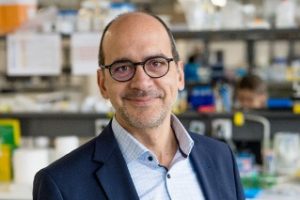
Nasri Nahas, CEO of Biopôle, shares his vision for one of Europe’s leading life sciences innovation parks and its evolving role within the national and international healthcare ecosystem. In this interview, Nasri discusses Biopôle’s key priorities, including the integration of AI and data, sustainability in life sciences, and the importance of promoting a more holistic and preventive approach to healthcare.
Can you share how Biopôle has evolved since we last met, and highlight some key milestones and achievements?
The biggest highlight, for me, is that we have built a true community. When I started, there were just 31 companies at Biopôle. Today, there are 175. We now have more than 2,500 people working on campus every day—3,500 by the end of the year. And that number will only grow. We are about to open three new buildings next month, which will take us from 60,000 to 90,000 square meters of space.
To give you some context, Biopôle is now the largest concentration of life sciences in Europe. You might find larger science parks, like the Milton Park in UK, but those are multidisciplinary—they do clean tech, drones, satellites, and so on. At Biopôle, we are focused purely on life sciences, which is quite unique.
This growth is ongoing. By the end of this year, we expect to have around 3,000 people on site and to welcome about 30 new companies. But again, the real milestone for me is not the square meters or the buildings, it is the community we have created. That has been the focus of my team and I from day one, and I am proud to say that ten years past my start at Biopôle, the vision has become a reality.
What are Biopôle’s key areas of focus today?
I believe that specialisation is essential, especially in a small country like Switzerland where you need critical mass to build a true ecosystem. At Biopôle, we welcome more than 175 companies that span the full spectrum of life sciences, from wellness to illness; from prevention through nutrition, sports health, diagnostics, and therapeutics, to digital health tools that monitor patients at home.
On our campus you will find global players such as Roche Diagnostics and CSL Behring, mid‑sized firms like DistalMotion and Ichnos Glenmark Innovation, and early‑stage startups in our incubator. We also host academic research groups from the University of Lausanne’s Faculty of Biology and Medicine alongside clinical research teams from Lausanne University Hospitals (CHUV), including oncology and immunology departments. While we do not have inpatient beds, this co‑location of academia, clinical research, and industry creates great diversities in one single community.
My role lies in cultivating this holistic ecosystem, ensuring that each specialised segment, whether biotech, medtech, diagnostics, or digital health, benefits from shared infrastructure, collaborative opportunities, and the critical mass needed to drive innovation forward.
With such a diverse range of companies under your umbrella, each with different needs, how do you tailor your support and manage this broad portfolio effectively?
I see my role as that of a community enabler with a clear service mindset: everything we do at Biopôle is in service to our member companies. As a not‑for‑profit owned by public authorities, we are here only to promote life sciences in Vaud and across Switzerland. Our success is measured by theirs. If they thrive, we have done our job.
We start by listening. From our startup incubator, where we have graduated over 50 companies with an 85 percent five‑year survival rate, to our Digital Health Hub inaugurated in 2019 and the Swiss Data Science Centre (SDSC), a joint initiative from EPFL and ETHZ, who will join us this year, each initiative grew directly from listening to our members and to their feedbacks. We always try to understand their pains, anticipate their needs, build the right infrastructure or tools, and then connect companies to those resources.
We also foster connections. For the fourth consecutive year, more than 60 percent of our CEOs report collaborating with another entity on campus; a company or an academic institute, because we introduce startups to SMEs, academics to clinicians, and innovators to investors. Finally, our Corporate Partnership Program delivers tailored scouting for global partners such as Roche, Novartis, BMS, CSL Behring, and others. We listen to their priorities, then identify and vet local and European projects to match their needs—achieving a 100 percent renewal rate and tangible outcomes like licensing deals and acquisitions. This combination of service, listening, and connection is how we manage a broad, diverse portfolio effectively.
Can you tell us more about your initiatives in digital health?
When we launched the Digital Health Hub, we began by co‑locating over 1,000 square meters for companies developing digital solutions, software vendors, connector specialists, and more, to collaborate. Very quickly, we realised that bringing people together was only the first step. Too many promising technologies had no clear path into clinical practice or patient care.
To address that, we created the Vanguard accelerator. We scout the best digital health ventures, both Swiss and European wide, and present them before a multi‑disciplinary jury of nurses, physicians, venture capitalists, and industry leaders. We ask critical questions: where in the patient healthcare pathway will this tool be used? What pain point does it address? Will it fit into a busy operating room? Does it genuinely ease a nurse’s workload? These reality‑check sessions ensure that every solution is fully user‑centred and ready for adoption. Our audience know more than we can help about the technology; we try to add, through our network, the market feedback which we believe is the key for success. True innovation is more than a publication or patent: it is a discovery that finds a market. By bringing entrepreneurs, corporates, investors, clinicians, and patients together, we create an ecosystem where no one works in isolation and every great idea can become a tangible improvement in healthcare.
Last but not least, we all know that today, every company incorporates a digital or data component, even those with traditional wet lab activities. Our next priority is to help them leverage the vast amounts of data they generate, applying artificial intelligence to deliver real value for patients. The presence of the SDSC on campus, will certainly be a major catalyst of this endeavor.
In your view, where does Switzerland create the most value in the innovation ecosystem?
I think we must first accept that Switzerland, just eight million people—is not a market in the traditional sense. It is an exceptional innovation hub: per capita, we lead in biotech companies and fundraising, and we win on metrics of scientific output. But with such a small domestic base, our ventures inevitably must look beyond our borders or become acquisition targets.
I see Switzerland’s role as an innovation launchpad, a proof‑of‑concept market where you validate your idea, obtain Swissmedic approval, and demonstrate real clinical impact. Once you have that track record, you can scale globally.
Where we often fall short is in commercialization. Swiss entrepreneurs excel at technology development, but many lack deep sales and marketing stamina. I believe we need to balance our humility with greater commercial ambition. That may mean bringing in experienced business leaders or partnering with colleagues who have a proven track record in global markets. By doing so, we can ensure that our world‑class innovations not only work, but also reach the patients who need them.
How is Biopôle helping to facilitate access to funding, and what opportunities do you see to strengthen the funding environment moving forward?
Our funding environment can undoubtedly be reinforced. We can and should do more to mobilize domestic sources, such as pension funds, to support early‑stage ventures. However, I see foreign investment in our companies not as a problem but as a strength. Switzerland’s stability, quality of life, and world‑class talent, drawn from institutions like EPFL, ETH, and UNIGE, keep most companies here after they raise capital abroad. In fact, only a handful have ever left following an overseas investment.
Yes, the market is tough for startups today. That said, in my experience, strong science backed by a clear path to market always finds funding. Rarely did I see a promising technology die purely for lack of capital more often it is refined or repositioned until better futures. I believe therefore that what we need is to shift our metrics from “number of companies” to “number of sustainable, fundable ventures.” We should embrace smart failure, pull the plug sooner on models that do not work, so that talented teams can regroup and succeed elsewhere. Fall often to succeed sooner should be our collective mantra.
Finally, Biopôle has pioneered an alternative route: our Corporate Partnership Program connects startups directly with end‑users and industry buyers. Instead of chasing venture capital alone, we help founders engage hospitals, clinics, and corporates as strategic investors. Examples include Clinique La Prairie’s stake in Volumina Medical or its commercial collaboration with our epigenetics company Genknowme or and LabCorp’s investment in Biospectral, a Vaud-based company. These collaborations validate technologies, align incentives, and often prove the most effective path to scale and commercialization.
Looking ahead, what are your key priorities?
In terms of how we move forward, I believe it starts with continuing to listen to the market. That is exactly what we advise our companies to do, and it is what we apply to our own activities. We never pretend having all the best ideas. Instead, we look closely at market trends, what stakeholders like you are writing, and what our data is telling us. Based on that, we try to anticipate needs and respond in a meaningful way.
Our goal is to keep doing what has worked well for us so far, while always seeking improvement. The moment we believe we have “arrived” is the moment we stop progressing. So, we remain focused on refining and fine-tuning our existing initiatives, just like we did with our digital efforts.
Looking more specifically at priorities, there are a few key areas that are especially dear to my heart. First is data and AI. I want to see how we can truly bring the power of data and artificial intelligence into life sciences in a way that improves health outcomes.
Second is sustainability. Our industry, and the broader healthcare system, is not yet exemplary in this area. At Biopôle, we are making efforts on the infrastructure side. You saw the green spaces; every year we plant 20 to 25 new trees and increase the permeable areas. Our buildings are designed with sustainability in mind, and we promote more environmentally conscious choices, even down to food options. But beyond our park, I am interested in how the life sciences industry as a whole can take sustainability seriously. As André Hoffmann often reminds us, we should not focus only on financial capital, but also on natural, human, and social capitals. I believe Biopôle, as a semi-public ecosystem, has a role to play in encouraging entrepreneurs to think beyond financial profitability.
Finally, I am increasingly concerned about the long-term sustainability of our healthcare system. In Switzerland and globally, we are spending an unsustainable share of GDP, about 11 percent here, up to 17 percent in the US on healthcare. And yet, integrated care is still lacking. Research, industry, and the healthcare system continue to operate in silos. We need innovation not just in treatments but also in how care is delivered—moving from a system that only cures to one that truly cares. This includes prevention: what we eat, the air we breathe, how we live. It also means keeping people healthy and out of hospitals, not just treating them once they are there. These are the areas where I hope Biopôle can contribute and make a difference.
Any final words to our international audience?
Switzerland is truly the place to be if you are a life sciences company willing to develop in Europe. It is not just a beautiful country to establish in, we have built here, notably at Biopôle, strong foundations for the industry. But we are all standing on the shoulders of giants—benefiting from decades of excellence in research, innovation, and partnering.